
Plan an email newsletter campaign with AI
Build a permission-based email campaign from a clear audience need, approved evidence and a measurable customer journey.
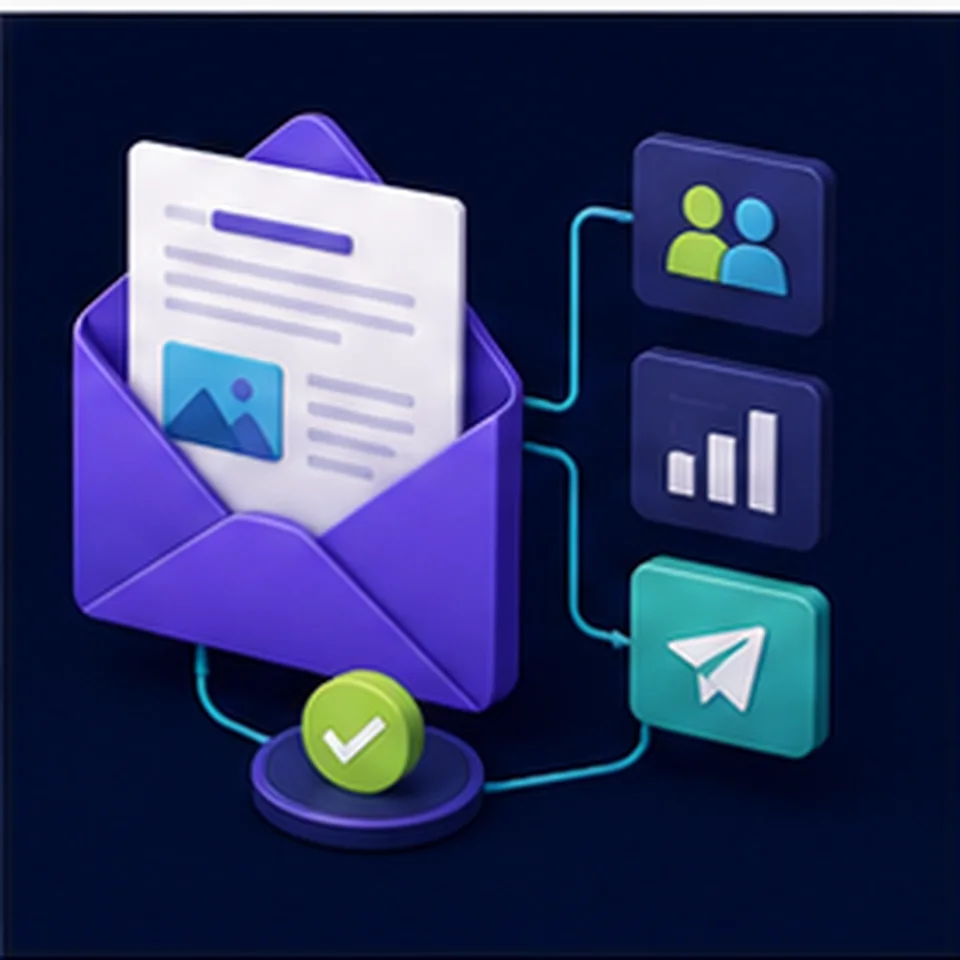
What you will produce
A reviewable result, not an automatic answer.
Follow the stages in order. Each stage ends with a tangible deliverable and a review checkpoint, so mistakes are caught before they become the next tool’s input.
Use free plans where suitable; confirm current provider limits and prices before starting. Compare the latest verified AI pricing before buying another subscription.
Suggested stack
Tools used in this workflow.
The process matters more than the brand. Use an approved equivalent when it offers the controls and output quality your organisation needs.



Inputs and ownership
Before you start
- A lawful, permission-based audience and current suppression list
- A defined campaign purpose, offer and landing destination
- Approved brand, product, price and proof information
Interactive workflow
Complete each stage in order.
Tick a stage only after its deliverable and review checkpoint are complete.
-
Define the audience segment, need, campaign objective, exclusions and success measure.
DeliverableAn audience and consent brief
Review checkpointUse the approved permission and suppression rules.
-
Map one message promise to the landing page, offer conditions and customer lifecycle stage.
DeliverableA message-match plan
Review checkpointMake sender identity and commercial intent clear.
-
Create the sequence, subject-line directions, content hierarchy and fallback for non-engagement.
DeliverableA campaign sequence outline
Review checkpointDo not manufacture urgency, social proof or personalisation.
-
Draft accessible, concise emails with accurate sender identity, conditions and unsubscribe handling.
DeliverableReviewed email drafts
Review checkpointTest every link and the mobile/plain-text versions.
-
Review links, tracking, rendering, frequency, localisation, consent and post-send response handling.
DeliverableA send, monitoring and learning checklist
Review checkpointMeasure downstream action and complaints, not opens alone.
Adapt, do not paste blindly
Working prompts for this recipe.
Replace bracketed placeholders, supply approved sources and remove unnecessary personal or confidential information.
Working prompt
Use this only after replacing every bracketed placeholder and removing unnecessary sensitive information.
Create an email campaign plan for [PERMISSION-BASED SEGMENT] promoting [OFFER] with the objective [OBJECTIVE]. Use only the approved claims and conditions below. Provide sequence purpose, subject-line directions, preview text, message hierarchy, CTA, landing-page match and review notes. Do not invent urgency, discounts, customer history or testimonials. Include clear unsubscribe and suppression requirements.\n\nAPPROVED INPUTS:\n[PASTE INPUTS]
Final review prompt
Use as a second-pass checklist, not as approval to publish.
Review the draft against this intended outcome: Build a permission-based email campaign from a clear audience need, approved evidence and a measurable customer journey. List unsupported claims, missing evidence, ambiguous language, privacy concerns, accessibility issues and actions that still require human approval. Do not rewrite the draft until the issues are listed separately.
Human review required
Verification and cautions
- Verify names, figures, quotations and source claims before use.
- Remove confidential or personal information unless the selected service and account are approved for it.
- Keep a named person responsible for the final decision and published output.
Keep the outcome, change the method
Practical alternatives
Continue with context